What Will Happen During Your Hearing Assessment
One reason your parent or spouse might have avoided having a hearing test until now might come from not knowing what to expect. You can rest assured that hearing tests are non-intrusive, not painful, and take about 30 minutes to complete. A hearing assessment can be broken into four parts.
Physical Examination of Your Ears
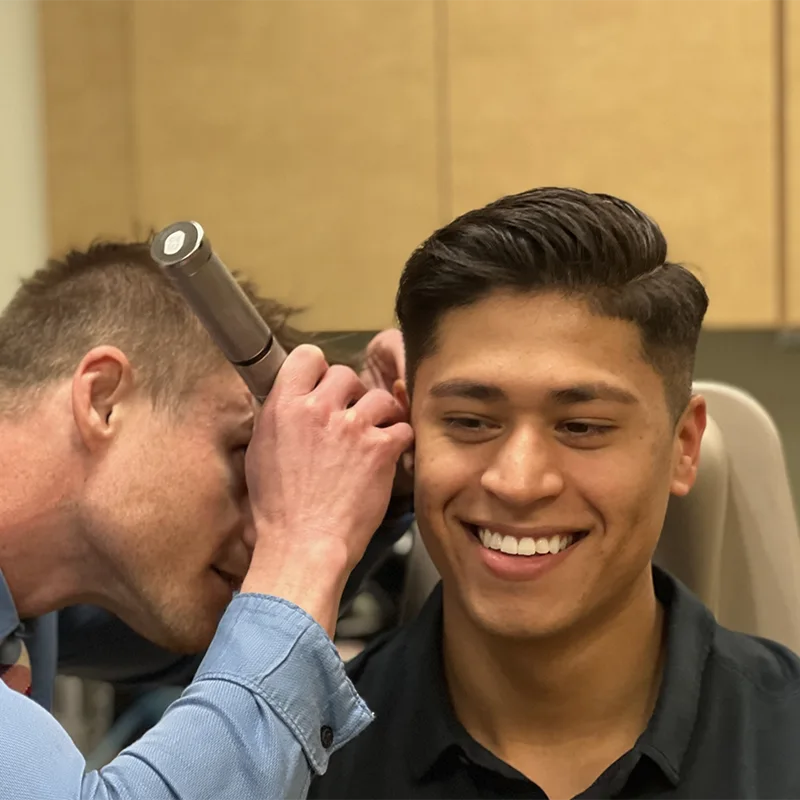
With sufficient background information, your audiologist will begin your testing with a physical examination of your ears using an otoscope.
An otoscope is little more than a magnifying glass with a tapered tip and a tiny light. It allows your audiologist the ability to identify inflammation, growths, or any tumors obstructing the ear canal as well as wax, bugs, and other obstructions that reduce the capacity of your ears to conduct sound to the middle and inner ear.
Discussion of Results
With all of the information gathered through testing, your audiologist will bring you back to the office in order to discuss the results. You will learn the extent of your hearing loss, its likely cause, and the treatment options available for your specific condition. Your input is a critical part of creating a comprehensive hearing care plan designed to meet your hearing needs, but it will also include your personal preferences and lifestyle concerns.
Because hearing aids are among the best treatment options for certain types of permanent hearing loss, the discussion may include the process of choosing and fitting you with a hearing instrument. However, medications, minor outpatient procedures, tinnitus management, changes to your prescription medications, or a referral to another specialist might also be among the best solutions for treating your hearing loss. If your audiologist does not identify hearing loss during testing, the discussion might include recommendations for hearing protection to be used during certain activities along with preventative measures to prevent future damage.
Schedule an Appointment
Types Of Hearing Tests And What They Do
There are a variety of tests used in a comprehensive hearing assessment. Each plays a role in identifying a specific element of your hearing loss, providing your audiologist with the necessary information to treat your specific condition.
Schedule an Appointment
Pure-Tone Testing
Pure-tone testing, also known as air conduction testing or a “hearing test,” transmits sounds from a pair of earphones through your outer and middle ear. Audiologists are able to test one ear at a time or both at the same time to identify hearing loss issues. This test establishes the quietest sound you can hear at different pitches or frequencies, or your hearing thresholds.
Bone Conduction Testing
Speech Testing
Acoustic-Reflex or Tympanometry Testing
Additional Tests