

|
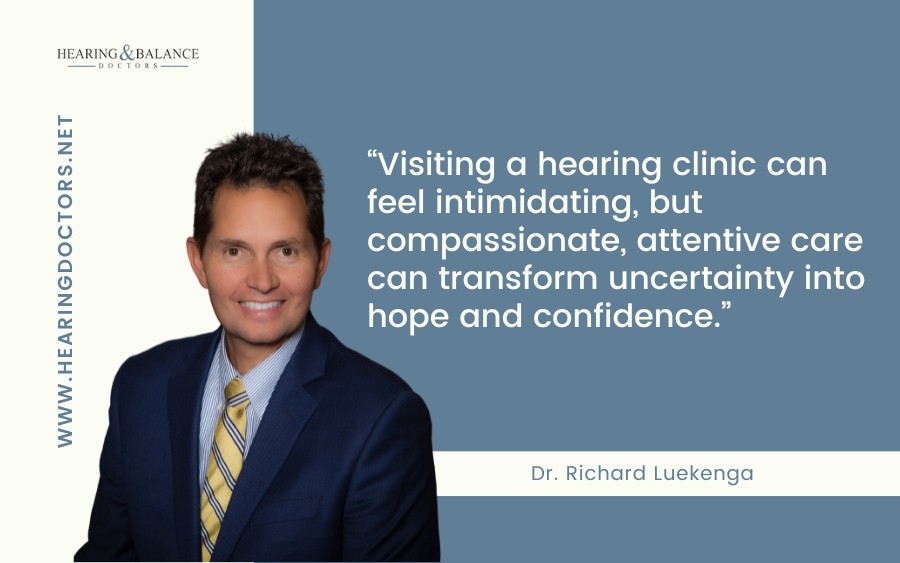
Dr. Richard Luekenga
|
Hearing loss is often thought of as a personal challenge, but it impacts everyone around you.
For years, Julie focused on supporting her husband’s hearing needs, repeating instructions, raising her voice, and making sure he didn’t miss family conversations, without realizing her own hearing was slowly declining.
She explains how this became impossible to ignore: she was “frequently having to ask someone to repeat what they said,” and it was more than a minor irritation; it had become a growing concern.
Hearing loss often develops gradually, which makes it easy to overlook in yourself. Yet the small frustrations it causes can quietly create tension in family interactions and reduce emotional connection.
Julie’s experience highlights that addressing your hearing is not just self-care – it’s an act of love that improves communication, strengthens bonds, and restores harmony at home.
Julie’s Unexpected Turning Point at the Hearing Clinic
Julie went to Hearing & Balance Doctors to support her husband, not expecting to be assessed herself. But the team quickly noticed her own hearing difficulties. She recalls that “the doctor could tell I needed help as well and immediately helped me, along with helping my husband.”
This simple observation changed everything. Many people focus on others while overlooking their own needs, especially when it comes to hearing.
We provided Julie not just with a professional assessment but also with reassurance and guidance, helping her take the first step toward better hearing and improved family connections. Visiting a hearing clinic can feel intimidating, but compassionate, attentive care can transform uncertainty into hope and confidence.
The Slow Creep of Hearing Loss — Easy to Miss, Hard to Ignore
Hearing loss often appears gradually. Over several years, Julie began mishearing words and asking people to repeat themselves more often, until it became part of her daily routine. She describes it as “annoying, irritating, and becoming more of a big concern.”
This gradual decline is common and can affect relationships and emotional well-being before it is noticed. Simple activities like family dinners, group conversations, or watching TV together can become challenging.
Recognizing early signs of hearing loss allows for timely intervention, helping to restore clarity, confidence, and smoother connections with the people you care about most.
Feeling Safe, Seen, and Supported at Hearing & Balance Doctors
First visits to a hearing clinic can be intimidating, but Julie was reassured by the warmth and professionalism of our team.
She felt that her concerns were genuinely heard, noting that the staff “sincerely cared, were very competent professionally, and were very, very willing to work with us to find the best solutions for our problems.”
By blending clinical expertise with empathy, we helped Julie feel understood and confident in her options. This patient-centered approach ensures that hearing solutions are tailored not just to the technical needs but also to the lifestyle and emotional well-being of each individual, helping patients feel safe, respected, and supported throughout the process.
The Transformation: From Frustration to “An Absolute Blessing”
Once Julie received her hearing aids, the impact was immediate. What had been daily frustration, misheard words, repeated questions, and growing irritation, was replaced with relief and joy.
She describes the devices as “very dear friends” that completely transformed her experience, turning irritations and sadness into an absolute blessing, and improving the lives of her family members as well.
Hearing aids do more than restore sound – they restore connection, ease tension, and strengthen relationships. Conversations at home flowed naturally, the need to shout or repeat statements diminished, and emotional strain lifted.
This transformation illustrates the profound impact properly fitted hearing aids can have on both personal well-being and family life.
Hearing Aids Benefit Everyone Around You
Addressing hearing loss benefits more than the individual – it impacts the entire household.
As Julie puts it, “Don’t be ashamed that you need them; this is not just about you but about everyone around you, especially those you love.”
Untreated hearing loss can create subtle tension and stress in relationships, from repeated questions to misunderstandings and occasional frustration. Properly fitted hearing aids reduce these challenges, restoring calm, clarity, and emotional connection in the home.
Taking care of your hearing is an act of care for yourself and for the people you love most.
Why Julie Recommends Hearing & Balance Doctors After 7 Years
Seven years after her first visit, Julie continues to rely on us for ongoing care, praising our combination of expertise and compassion. She highlights how our team has been “careful, patient, and respectful” in addressing every concern, providing attentive guidance for each stage of her hearing journey.
Long-term, relationship-focused care ensures that hearing solutions continue to meet patients’ evolving needs. Julie’s experience demonstrates the value of working with a clinic that combines advanced technology with genuine empathy, creating a supportive environment that fosters confidence, well-being, and improved family connections.
Taking Care of Your Hearing Is One of the Kindest Things You Can Do for Your Family
Hearing loss affects more than just the individual – it shapes communication, emotional connection, and daily life at home. Julie’s story demonstrates how compassionate care and the right hearing aids can restore clarity, ease, and harmony in the family.
Seeking help for your hearing is an act of self-care and love. By addressing hearing challenges, you improve your own quality of life while giving your family the gift of easier, more meaningful communication and deeper connection.
Don’t wait – schedule your hearing consultation with Hearing & Balance Doctors today and reconnect with your family.
Frequently Asked Questions (FAQs)
1. How do I know if my hearing aids are the right fit for me?
The right hearing aids should feel comfortable, provide clear sound in everyday situations, and be easy to adjust. Working closely with an audiologist ensures the devices are tailored to your specific hearing needs and lifestyle, helping you feel confident and supported in daily conversations.
2. How long does it take to adjust to new hearing aids?
Most people notice improvements within a few weeks, though adjustment times can vary. Regular use, patience, and follow-up appointments to fine-tune settings help the hearing aids feel natural, making listening easier and reducing fatigue from straining to hear.
3. Can hearing aids improve communication with family and friends?
Yes. Properly fitted hearing aids reduce the need for repetition, improve clarity in conversations, and ease frustration in daily interactions. They help restore connection and emotional closeness, making communication smoother and less stressful for everyone involved.
Sources
https://www.nidcd.nih.gov/health/hearing-aids
Explains how hearing aids work and how they help people with hearing loss participate more fully in daily life.
https://www.asha.org/public/hearing/hearing-aids/
Provides practical guidance on selecting, adjusting, and using hearing aids to improve clarity and communication.
https://www.mayoclinic.org/diseases-conditions/hearing-loss/in-depth/hearing-aids/art-20044116
Offers an overview of hearing aid types, the fitting process, and the benefits of professional assessment for optimal hearing outcomes.